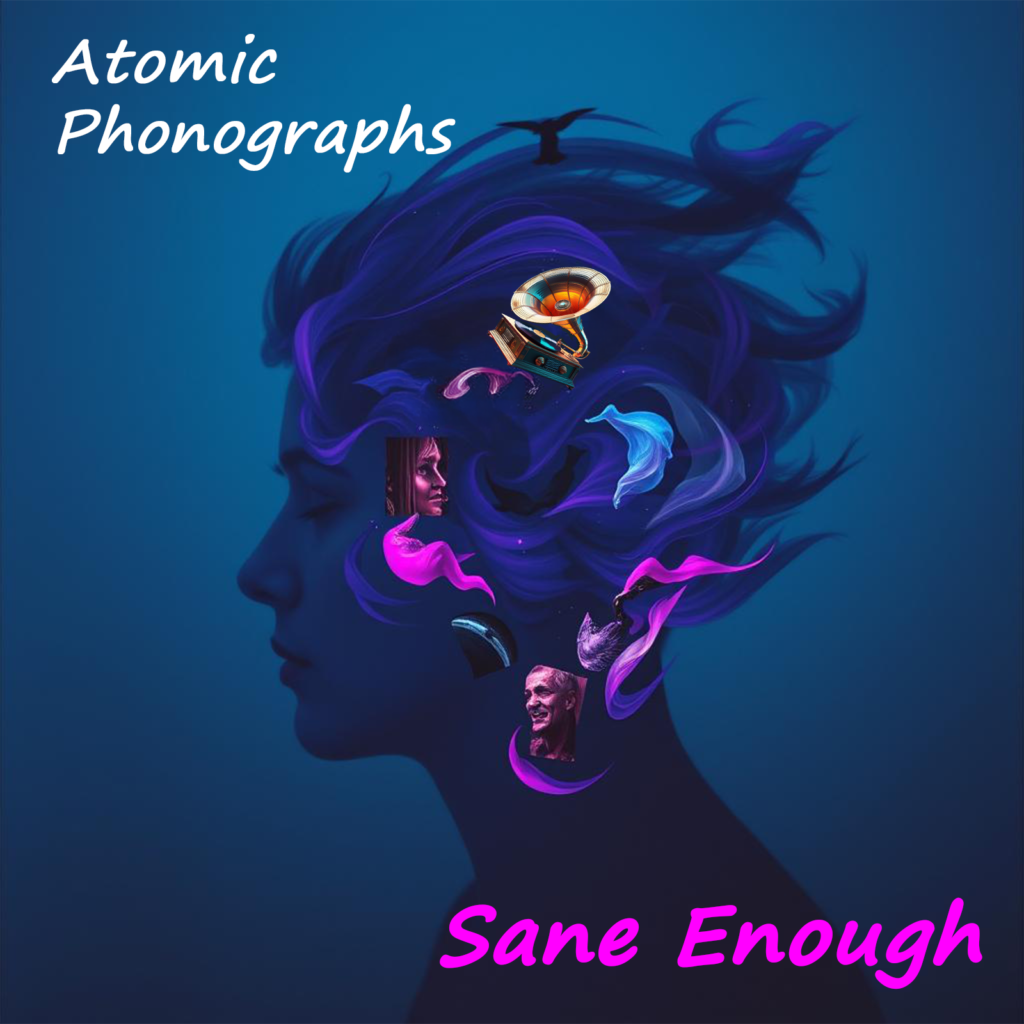
How to Start an Independent Record Label in 2026 (Without Selling Your Soul)

What belongs to the machine?
What remains after the signal?
The answer is still moving.
Begin With A Reason
Starting an independent record label is easier than it was a decade ago.
The tools are everywhere.
Distribution is accessible. Production can happen from a bedroom. Visual identity can be built without a design department. A small team can release music across the world.
But access is not direction.
The first question is not:
How do I release music?
It is:
Why should this label exist?
An independent record label needs a point of view. A sound. A boundary. Something it will protect.
At Atomic Phonographs, the beginning was not a business plan.
It was visualization.
A feeling. A scene. A private atmosphere.
We wanted to turn those impressions into sound. Over time, the project became something more personal: a way to express ideas, moods, questions, and contradictions.
That became the center.
Not a fixed genre.
A recognizable intention.
Define The Shape
Your label can be narrow.
It can be wide.
It can follow one scene, one city, one sound, or one impossible question.
The important thing is to know what connects the releases.
For an indie music label, that connection might be:
- A specific genre or subgenre
- A visual language
- A production philosophy
- A shared audience
- A recurring emotional atmosphere
- A commitment to unusual or overlooked work
Do not confuse variety with randomness.
A label can release ambient music, alternative pop, experimental music production, and high-energy electronic tracks if the choices feel intentional.
The catalog should feel like a room.
Different objects.
One atmosphere.
Explore the Atomic Phonographs music gallery to see how sound and mood can sit beside each other without becoming identical.
Build The Entity
The creative idea comes first.
The legal structure still matters.
If you are operating in the United States, many small labels begin with an LLC or another appropriate business structure. The exact choice depends on your location, tax position, partners, and plans.
At minimum:
- Check that your label name is available.
- Search for existing trademarks.
- Register the business where required.
- Apply for a tax identification number if appropriate.
- Open a separate business bank account.
- Track every expense and payment.
- Use written agreements.
Do not mix personal and label finances.
Do not rely on memory.
Do not assume a friendly relationship replaces a contract.
A small underground music label still needs clear records. Especially a small underground music label.
Speak with a qualified attorney and accountant in your jurisdiction before signing artists, licensing music, or creating a publishing arrangement. This is practical guidance, not legal advice.
Own The Details
Music contains several layers of rights.
The composition.
The lyrics.
The master recording.
The artwork.
The name.
The likeness.
The metadata.
They are not automatically owned by the same person.
A release agreement should state:
- Who owns the master
- Who owns the composition
- The length of the agreement
- The territory covered
- The royalty split
- Recoupable expenses
- Creative approval
- Release responsibilities
- Reversion or termination terms
- Rights connected to voices, images, and AI tools
Plain language helps.
A useful agreement should not feel like a trap hidden inside a document. It should make the relationship visible.
If you are working with artists, consider short terms and limited rights. A release license may be more appropriate than permanent ownership in some situations. Every deal is different. Every agreement should be reviewed carefully.
The principle is simple:
Clarity before momentum.
Make The Music
This is where our process becomes less conventional.
Atomic Phonographs is built around AI-assisted music.
Eric writes the lyrics.
Suno generates the tracks.
Then the real work begins.
A song may pass through roughly 50 to 75 iterations. Some arrive after 10 renditions. Others move toward 100.
Tweak.
Edit.
Crop.
Fade.
Repeat.
The tool creates possibilities. Human judgment creates the final direction.
We listen for the moment when the track stops feeling like an experiment and starts feeling unmistakably itself.
That process is our version of alternative music production. It is not about pressing a button and accepting the first result. It is about directing, rejecting, refining, and recognizing.
The machine opens the door.
Someone still has to decide which room matters.

The Real Art Question
Is AI-assisted music real art?
The question has no quiet answer.
It resembles older arguments:
CGI versus practical effects.
Photoshop versus traditional media.
Photography versus painting.
Electronic instruments versus acoustic ones.
Each new tool changes the visible process. It does not remove the need for taste, intention, editing, or emotional judgment.
At Atomic Phonographs, we are interested in the tension rather than the verdict.
A human writes the lyrics.
A system generates musical material.
A human selects, reshapes, and develops the result.
The final work exists somewhere between intention and emergence.
That is not a weakness.
It is the subject.
Are we real? Are you?
If your label uses AI, disclose it. Keep records of your creative process. Understand the terms of the tools you use. Avoid imitating a specific living artist’s voice or identity. Do not assume that every generated output receives the same copyright protection as human-authored work.
The U.S. Copyright Office explains that copyright protection focuses on human authorship and that AI-generated material may need to be disclosed or excluded from a registration claim. Read its current AI and copyright guidance before building a rights policy.
The law is still developing.
Your documentation should begin now.
Create The World
An indie record company is more than a delivery mechanism for audio files.
It is a world around the music.
Cover art matters.
Typography matters.
The release title matters.
The page where someone discovers the track matters.
A strong visual identity gives listeners another way into the work. It creates memory before the first note begins.
At Atomic Phonographs, each release can carry its own atmosphere. Some images are bright and direct. Others are fogged, cinematic, or difficult to place.
The catalog remains broad.
The visual language remains deliberate.
Build a simple system for every release:
- Cover art
- Artist or project name
- Release title
- Short description
- Credits
- Platform links
- Social assets
- Press image
- Consistent metadata
Visit the Atomic Phonographs visuals gallery for a look at how sound can extend into image.

Distribute With Patience
Most new labels begin digitally.
Choose a distributor that supports your release volume, catalog size, territories, metadata, royalty reporting, and number of artists. Some services use annual fees. Others take a percentage. Some are designed for individual artists; others are built for label operations.
Compare the practical details.
Can you manage multiple artists?
Can you divide royalties?
Can you update metadata?
Can you reach the platforms your audience uses?
Can you access useful reporting?
Before upload, prepare:
- Final audio files
- Approved artwork
- Artist and writer credits
- Release date
- ISRC information where applicable
- Explicit-content information
- Lyrics where requested
- Territory and rights details
Do not rush a release because the file is finished.
A release needs space to exist.
A simple four-week schedule can help:
Week one: finalize the master, artwork, credits, and metadata.
Week two: deliver to the distributor and prepare announcement assets.
Week three: share previews, contact relevant publications, and organize platform pitches.
Week four: release the track, monitor its performance, and continue the conversation.
A song is not finished on release day.
Promote The Signal
You do not need to be everywhere.
Choose the places where your audience already looks for music, images, and ideas.
A website gives the label a stable home. Social platforms create movement around it. An email list creates a direct connection that algorithms cannot completely control.
An alternative music blog can become part archive, part journal, part listening room.
Share:
- New releases
- Artwork
- Short production notes
- Visual experiments
- Playlist appearances
- Studio fragments
- Questions about the work
Avoid explaining everything.
Mystery is useful when it leaves room for discovery.
Promotion should invite attention, not demand it.
Protect The Catalog
Keep a living catalog spreadsheet or database.
Record:
- Release titles
- Versions
- Contributors
- Ownership
- Agreements
- Split percentages
- ISRCs
- Distributor IDs
- Release dates
- Artwork permissions
- Revenue received
- Payments owed
Back up the audio.
Back up the artwork.
Back up the agreements.
An underground record label can be artistically free and administratively precise. The two qualities support each other.
Good records protect the future version of the label.
Start Small Enough To Continue
Do not begin with a roster you cannot support.
Do not press physical product before understanding demand.
Do not spend a year designing a label that never releases anything.
Start with one strong release.
Then another.
Learn what the audience responds to. Learn what takes too long. Learn which parts of the process create energy and which parts quietly drain it.
A label becomes real through repetition.
Not through a logo.
Not through a title.
Through a body of work.
Keep The Question Open
There is no single correct model for an independent music producer, an indie music label, or an experimental music production company in 2026.
You can work alone.
You can build a collective.
You can release only your own music.
You can support other artists.
You can make sound for focus, entertainment, movement, memory, or no declared purpose at all.
The tools will keep changing.
The question will remain.
What did the human choose?
What did the machine reveal?
What became yours?
At Atomic Phonographs, we are still listening for the answer.
Are we real? Are you?
Further Reading
- Atomic Phonographs : Music
- Atomic Phonographs : Visuals
- Atomic Phonographs : About
- U.S. Copyright Office : Copyright and Artificial Intelligence
Penny